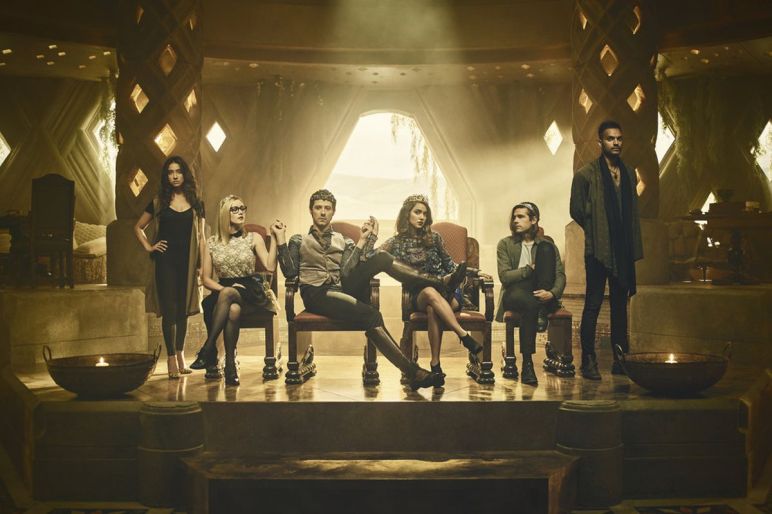

If there’s one aspect of filmmaking that seems destined to be just as overlooked as it is powerful, it’s the score. Composers are some of the most prolific artists in the business, constantly creating new music that feels specific and unique to each project. They often elevate the tone of every scene and create something iconic that won’t leave your head for days to come.
Will Bates is one of these composers. While he is likely best known for Syfy’s The Magicians (which he has composed for since the pilot), he’s also led projects like the political documentary Hillary, Netflix’s critical and awards darling Unbelievable, A24’s Timothée Chalamet-starring Hot Summer Nights and Hulu’s The Looming Tower and The Path.
TV Wasteland sat down with Bates to discuss his career, his experience in the industry, and how his love for music came to be.

When it comes to the process of actually sitting down to compose, “every process is kind of unique.” Every project requires different mindsets and focus, but Bates stressed the importance of a first draft. Even though “for every kind of situation or character that I score, I like to source an instrument,” Will always starts with the piano. Even if he knows the final score won’t have piano in it, he often has a eureka moment as he finds the tune while watching the scene, as “eighty percent of the job is that first thing you write.” He also uses different subject matters as opportunities to try out new instruments and sounds. Two of his projects, one set in nineteenth-century Borneo and another centered around simulation theory, required such different influences and sounds, but someone like Bates with so much experience and versatility can back it up well. He claimed that sometimes that it’s the weirdest and most unexpected instruments that can be the key to unlocking the whole score.
Like most children of the seventies, Bates’ cinematic childhood could be characterized by one franchise: Star Wars. Like many children of the time, Bates loved the science fiction epic, but maybe for a different reason than most: the music. He convinced his parents to buy him the vinyl record of the score, and it’s what sparked his love of cinematic music. As he grew up, this adoration only grew and evolved into a true passion. In fact, he called composing the “only thing I’ve ever really known how to do.”

He cites his study of film scores as almost “accidental.” He loved listening to them and seeing how they worked with the visuals on screen, and it seems it was almost unintentional how much he picked up along the way. The Good, The Bad, and the Ugly and John Carpenter were other big influences for him, while Blade Runner specifically swayed his future use of synth.
Bates really does get the best of all the worlds, having worked in commercials, film, and television, but he finds the most unique experience to be scoring for documentaries. Many doc filmmakers like to try to stray away from the usual genre form, but end up coming back to the traditional style at one point or another. “There’s just so much more music” in a documentary, but there’s also a lot of room to play with when relating to real-life events.
It’s very important for Bates to like the projects that he’s working on as well. He recalled being especially excited about Unbelievable, rushing to the studio to watch the next episode and figure out how he wanted to portray the story of Marie.
One of the challenges Bates identified with the musical process was continuing others’ work. When he works on a film or a documentary, it’s all him, but there have been cases where he’s had to come on to a TV show on episode two or three, when the tone and style of the score has already been established by someone else. He said that that was very difficult, as it felt “weird” to replicate someone else’s work.
These days, Bates is still a huge John Williams fan and recommends his annual show at the Hollywood Bowl. He’s very interested in the more modern trend of blending electronics and traditional orchestra (as can be found in the creations of Trent Reznor, Atticus Ross, and Nick Cave).
One of the most interesting projects that he’s ever worked on? The upcoming Bliss, starring Owen Wilson and Salma Hayek, directed by Mike Cahill. It marked the first time Bates had used a full orchestra, which gave a “slightly different scale” to the whole affair.
His love for sci-fi is still evident, as he gave Ridley Scott, Denis Villeneuve, and J.J. Abrams as examples of filmmakers that he would love to work with in the future. As a fan of the original Dune, he did express his regret that he was not able to work on the upcoming remake.

One of Bates’ main goals for the future is to create some “cross-pollination” between the two worlds of commercials and film/television. His company, Fall On Your Sword, does both, but Bates would like to see the two industries become more similar over the next few years. He loves the atmospheric, big chord trend that’s currently overtaking Hollywood, but he also wants to turn movie scores back to “hummable” tunes a little bit, to create an iconic tune that can become that earworm for people even weeks after seeing the movie.
At Sundance, Bates did a live showcase of one of his works, and he looks forward to hopefully doing a full live concert someday. It’s a relatively new trend, composers performing their music for an audience, but he identified it as one of the signs of people paying more attention to score. While only certain scores were available for purchase a few decades ago, now almost any major release’s soundtrack can be found on iTunes or Spotify. This has caused a greater appreciation for this art form, especially among young people.
Bates admitted feeling a little bit of pressure nowadays when writing just because of how “the standard is incredibly high” when creating scores. “Qualities of all scores now are all really good,” and it can be difficult to stand out, but the breadth of Bates’ work allows him to constantly innovate and try new things. If you look at Bates’ IMDb page, you’ll see half a dozen projects each year, a seemingly impossibly packed filmography. He described this way of life as very difficult. His studio has to often be a home away from home, and it can be hard to keep up with the demands of studios. He loves the fast pace of the “juggernaut” of television, but like in situations where he had to compose a scene in the delivery room while his first child was being room, it can be easy to get overwhelmed. (This delivery room project was the pilot for The Magicians, which has just announced that its series finale will air next month.) There are “systems in place” that can synchronize his home and studio, and while technology has helped a lot, he identified the company that he founded (Fall On Your Sword) as the saving grace that can ease the load onto the shoulders of many different people who can work together.

In the future, Bates hopes to work more in the video game industry, which he described as fascinating and extremely committed. The music departments at Ubisoft in particular were “incredibly intelligent and switched on,” and he’s especially interested in the interactive world overall. In the lobby of his studio, a Wild West-themed experiential installation was set up, and he will work on more of those types of interactive installations in the future.
When you’re watching a new movie or television show in the future, we suggest listening closely to the score and appreciating it, as it’s often so overlooked as the rudder that guides the emotion of your favorite scenes.
 TV Wasteland