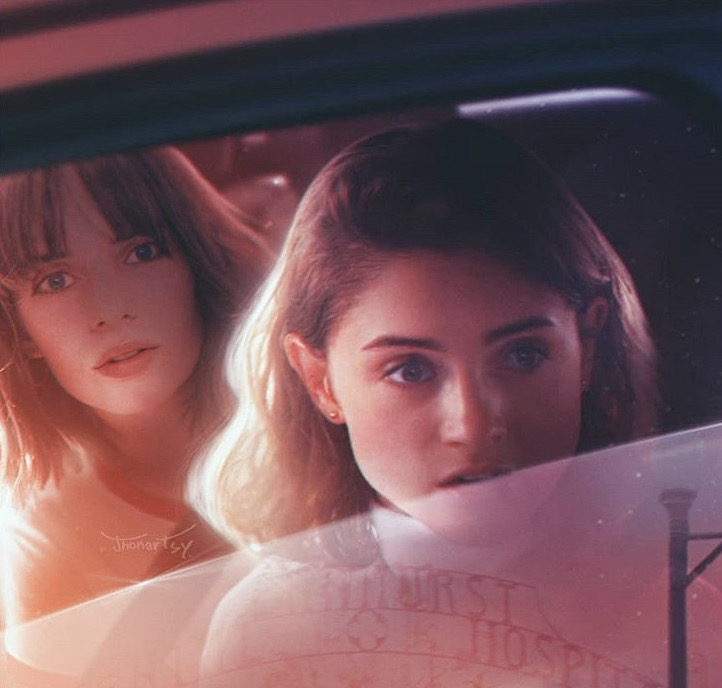
Cover art by @jhonartsy on Instagram
By Matt Gannon
Whenever a second season of a show comes out, or a director releases their second feature, the term “sophomore slump” is always thrown around. Did they rise above it? Or did they prove that the amazing first season or movie was just a fluke? That second time around is always seen as the stressful hurdle that all creators have to jump over. However, I think that there’s something a little more indicative of a series’ or creator’s staying power: the third installment.
The third installment is where writers get comfortable. If they’ve hit it out of the park the first two times, then they don’t really need to worry anymore. They’ve got this, right? (Hint: a lot of the time, they don’t.) Some of the most iconic trilogies of all time are known for their weaker third installments. The newer X-Men series even derided the concept, saying that “the third is always the worst,” ironic when you remember that the line is placed in the third movie, which was almost universally regarded as a big step down from its predecessors.
Having successfully avoided the sophomore slump, Stranger Things season three was in danger. The gate was closed. Will was healthy and free from the influences of the Mind Flayer. Eleven had found a (somewhat) stable home and a family to call her own. Was there anywhere else for the show to go?
But of course, Stranger Things delivered its best season yet.
Set in July of 1985, the summer setting brings a fresh new energy to the show. The show finally seems to be fully leaning into its 80s influences, introducing brighter clothes, bigger hair, and a gorgeous color palette. For an era that was defined by the glitziest and gaudiest colors imaginable, it was strange that the show seemed to really only use red for any visual flair. But now, Hawkins seems to explode with vibrance, and even places that you would guess to be dark and gloomy, like the secret Russian base, pop with blues and greens. The best location by far is the new shopping mall, which is a welcome break from the monochrome government labs and gloomy alternate dimensions of regions seasons.
The writing and pacing are nearly flawless. Almost every character gets their own special moment, and it’s a wonder that every character can feel independent and unique in such a large cast. Each mini-group is sent on their own mission, and it’s wonderful to see each group get roughly the same amount of screen time and attention. Even with as many plot lines as there were, I never found myself groaning when any of the characters reappeared.
David Harbour and Winona Ryder are the highlights of the season. While Hopper may have grown just a little too action hero-y, the minor changes to his character are justified by the end. Harbour balances drama and comedy flawlessly, frequently switching between the two in any given scene. Ryder, surprisingly, is the comedic heart of the season. Until now, she’d never been given much outside of the time of intensely grieving mother. Not that she wasn’t great before (her Emmy snubs still make my heart hurt), but now that Will is safe (or at least as safe as any of the other kids), the writers intelligently give her a shift. She’s delightful, and her rants about Russians and magnets are perfection.
The quartet of Dustin, Erica, Steve, and Robin might just be my favorite thing this time around. Joe Keery gives nuance to a character with increasingly surprising depth, and as a teenager who just graduated from high school, it’s great to see a character who doesn’t feel the need to go to college to be happy. Gaten Matarazzo, the best of the child cast, has fantastic chemistry with all of the rest of the group. Priah Ferguson’s line delivery may feel repetitive at times (an obvious attempt to continue her viral one-liner status from season two), but one talk with Dustin in an air vent about My Little Pony shows that she is capable of more. And of course, Maya Hawke does not disappoint. She fits immediately into this world, and if the entire show became just about her and Steve fighting Russians, I would be thrilled.
The weakest link of last season (Dacre Montgomery) really steps up to the plate, giving a star-making performance that justifies his originally dubious addition to the show. Sadie Sink also impresses, and her chemistry with Caleb McLaughlin is great.
The most disappointing thing (and maybe the only disappointing thing) about this new season is how Eleven and Will have been sidelined. Millie Bobby Brown and Noah Schnapp were the MVPs of seasons one and two (respectively), both and have proved that they have the skills to rival actors three times their age. They’re also fascinating, Eleven for obvious reasons, and Will for his brushes with other worlds and the growing question about his sexuality. But the writers seem to have forgotten about them. Almost all of Eleven’s scenes involve her boyfriend troubles with Mike (what happened to the complex conversations about freedom and danger she used to be a part of?), and being constantly paired with the near-terrible Finn Wolfhard is painful to watch. She has some great moments near the end of the season, but mostly she just doesn’t seem to have a purpose anymore. It’s the same with Noah Schnapp. Sure, Will has mostly served his purpose in the story, and other than touching his neck three times an episode, it’s telling that the only conversation around his character comes from something Mike said. Brown and Schnapp could lead this show with ease, and it’s baffling to see them almost entirely tossed aside.
And let’s finally get Karen and Lucas their own complex plot lines and character development, okay? There’s so much in both of those characters that hasn’t been explored yet.
Then there’s the ending. Without spoiling anything, but the ending is actually perfect. Like, series finale perfect. I actually hope that the rumors that Season four will be the end are true. Not because of quality; I would gladly watch fifteen more years of all of this if I could. It just feels like we’re nearing the end of the road for these characters, and I worry that Netflix will try to push these characters beyond their natural and satisfying ending.
But overall, Stranger Things season three was an almost perfect eight episodes of television. It’s amazing to see a kids and teens’ show so entirely based on complex characters and their relationships, and everything about it is well worth the wait.
 TV Wasteland